
Aphrodite of Knidos by Praxiteles
350 BC
The ancient Greeks deserve credit for recognising the beauty of the human body. They began to express this is sculpture, paintings and frescoes. They also started to look for a better understanding of that beauty.
Aristotle and women
Aristotle (384-322 BC) tried to get a grasp of the world around us. He began to describe all livings things, including plants, animals and human beings. In many ways he is the father of the modern sciences.
Aristotle came to the conclusion that all living beings are what they are becaise of their 'nature'. Beauty, found in human nature, consists mainly in perfection of form, he said, in balance, proportion, symmetry. And while men's bodies are also beautiful, beauty is a special quality for women.
Observing men and women of his time, Aristotle deducted that men are stronger, have a sharper intellect, possess the ability to govern and rule. Women, Aristotle believed, are by nature subject to men. They exist to give pleasure to the men, to support the men and to give birth to their offspring. Men carried the 'seed' of future life and were therefore complete human beings. Women performed the duty of providing the soil into which men could sow the seed.
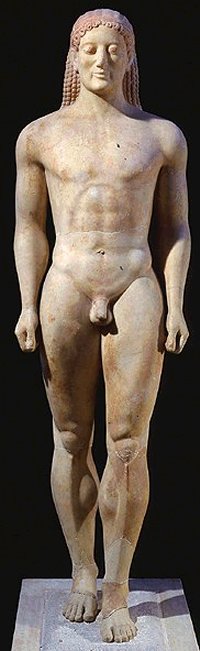
Kroisus - 530 BC

